

a VGT Malfunctions?
Modern vehicles, especially those with diesel engines, rely on sophisticated technology to deliver the power and efficiency we expect. A key component in this system is the Variable Geometry Turbocharger, or VGT. Unlike traditional turbos, a VGT uses adjustable vanes to control exhaust flow, optimizing performance across the entire RPM range for better throttle response and reduced lag. This complex mechanism provides significant benefits, but it also introduces unique potential for failure. Understanding what happens if a VGT malfunctions is crucial for any vehicle owner. Recognizing the early warning signs, from a loss of power and strange noises to excessive smoke, can help you address the issue before it leads to more extensive and costly engine damage. Prompt diagnosis is key to maintaining your vehicle's health and performance.
Ignoring the symptoms of a failing VGT can have severe consequences, including damage to the engine's internal components, failed emissions tests, and even complete vehicle breakdown. If you suspect your turbocharger is in trouble, seeking a professional diagnosis is the most important step. A qualified technician can determine if the issue stems from simple carbon buildup, a faulty actuator, or a more serious internal failure. Addressing the problem early ensures your safety, protects your investment, and restores the performance you depend on.
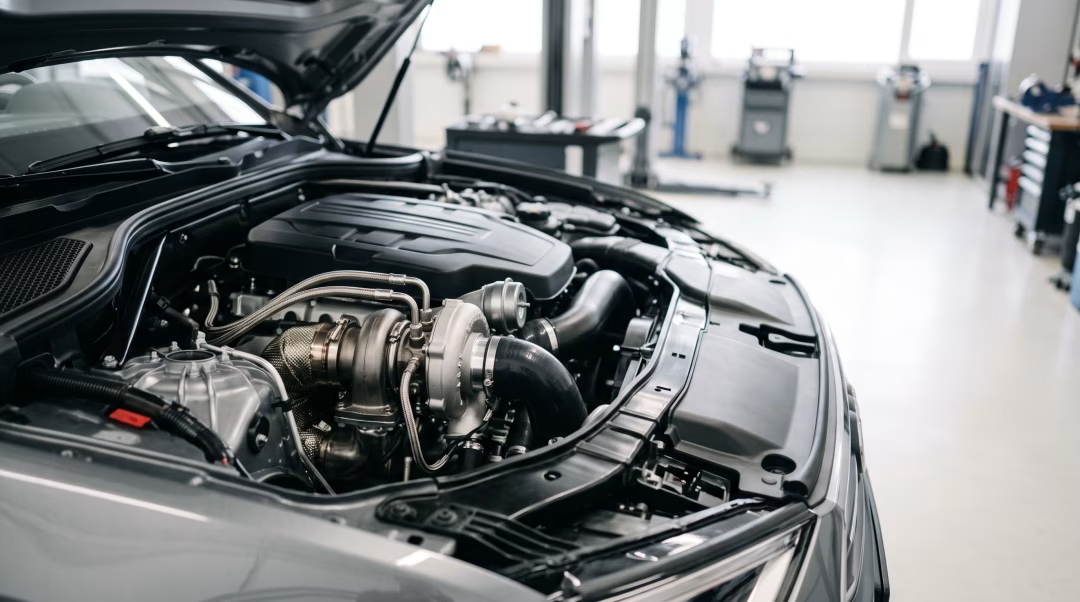
A Variable Geometry Turbocharger is a marvel of modern engineering, designed to give drivers the best of both worlds: quick low-end torque and powerful high-end performance. It achieves this by using a set of movable vanes inside the turbine housing. At low engine speeds, these vanes close to narrow the exhaust gas path, speeding up the flow and spinning the turbine quickly to eliminate turbo lag. At higher engine speeds, the vanes open up to maximize exhaust flow and prevent over-boosting. This constant adjustment, controlled by an electronic or vacuum actuator, is what makes the VGT so effective. However, this intricate moving assembly is also its primary vulnerability, especially when exposed to the harsh environment of engine exhaust.
When a VGT begins to fail, it rarely does so silently. The vehicle will provide several clues that something is wrong with its forced induction system. Being able to identify these signs can make all the difference. For more helpful articles, be sure to visit our blog.
A malfunctioning VGT can manifest in several ways. While some symptoms are subtle at first, they will typically worsen over time. Paying attention to how your vehicle drives, sounds, and performs is your first line of defense.
Understanding why a VGT fails is just as important as recognizing the symptoms. The root cause must be addressed during the repair to prevent the new or repaired unit from failing again.
The most frequent culprit, particularly in diesel engines, is the buildup of carbon and soot. These exhaust byproducts can accumulate on the VGT vanes and the unison ring that controls them, causing them to stick or seize. This prevents them from adjusting properly, leading directly to overboost or underboost conditions. Another common issue is actuator failure. The actuator is the component that physically moves the vanes based on commands from the ECU. Whether electronic or vacuum-operated, these actuators can fail, leaving the vanes stuck in one position.
Oil-related problems are also a major cause. The turbocharger's central shaft spins at incredibly high speeds and relies on a constant supply of clean engine oil for lubrication and cooling. Oil starvation, caused by a blocked feed line, or oil contamination, from dirty or degraded oil, can quickly destroy the turbo's internal bearings, leading to catastrophic failure. If you are concerned about the cost of such a repair, our financing department can discuss available options.
If you experience any of the symptoms above, it is time to visit a professional service center. A technician will start by connecting a diagnostic scanner to read any fault codes stored in the ECU. They will also monitor live data to observe boost pressure and actuator commands while the engine is running. Physical inspections are also necessary to check for boost leaks in the piping, listen for abnormal noises, and inspect for any visible damage or oil leaks around the turbocharger itself.
Depending on the diagnosis, there are a few repair paths. In cases of mild carbon buildup, it is sometimes possible to clean the VGT assembly without full removal. For more severe cases, the turbo must be removed for a thorough disassembly and cleaning or a complete rebuild. If the internal components like the bearings or turbine wheels are damaged, a full replacement with a new or remanufactured unit is the only reliable option.
Preventing VGT failure revolves around good maintenance. Adhering to your vehicle's recommended oil change schedule with high-quality oil is paramount. It is also important to allow your engine to warm up properly before heavy acceleration and to let it idle for a minute before shutting it down, allowing the turbo to cool and ensuring oil continues to circulate. For diesel owners, periodic highway driving can help increase exhaust gas temperatures, which aids in burning off soot deposits that can clog the VGT mechanism.
While you might be able to drive it for a short time, it is highly discouraged. Continuing to operate a vehicle with a bad VGT can lead to further engine damage, clogged emissions systems like the DPF, and leave you stranded. It is best to have it inspected and repaired as soon as possible.
The cost varies widely based on the vehicle and the extent of the damage. A simple VGT cleaning or actuator replacement could cost a few hundred dollars. However, a full turbocharger replacement can range from one thousand to several thousand dollars, including parts and labor.
Cleaning can be an effective solution if the sticking is caused by carbon buildup and there is no mechanical damage. However, it does not address the root cause of the buildup. Without changes in driving habits or addressing underlying engine issues, the carbon will eventually return.
The key difference is adjustability. A traditional turbocharger uses a fixed geometry and a wastegate to control boost. A VGT uses movable internal vanes to alter the exhaust flow, allowing it to act like a small, quick-spooling turbo at low RPMs and a large, high-flowing turbo at high RPMs, providing a much wider and more efficient powerband.
Not always, especially in the early stages of failure. A minor issue, like slight sticking of the vanes or a small boost leak, may not be severe enough to push sensor readings outside the ECU's acceptable range. You might notice symptoms like poor performance or noise before a check engine light ever appears.
