

Video Gaming in Illinois
The story of video gaming in Illinois is a fascinating journey that has transformed the local entertainment landscape. What started as a legislative effort to generate state revenue has blossomed into a thriving industry, creating unique social hubs in communities across the state. Before 2009, the idea of playing video slots at a local bar or lounge was nonexistent. The passage of the Video Gaming Act fundamentally changed the rules, paving the way for licensed establishments to offer a new and exciting form of adult entertainment. This evolution not only provided a new source of fun for residents but also reshaped how many small businesses operate. Understanding this history gives a greater appreciation for the comfortable and regulated environment you can enjoy today, turning a simple night out into a distinct Illinois experience. From legislative debates to the first machines going live, the path was anything but simple, yet it created the vibrant scene we know now.
This rich history has culminated in the modern video gaming lounges that are now a staple in places like Shiloh and the greater Metro East. Today, establishments offer more than just games; they provide a clean, safe, and friendly environment for friends to gather and unwind. The journey from a bill on the governor's desk to the sophisticated, comfortable venues of today reflects a major shift in local entertainment. Exploring this past helps you understand why these lounges have become such a popular and integral part of the community.
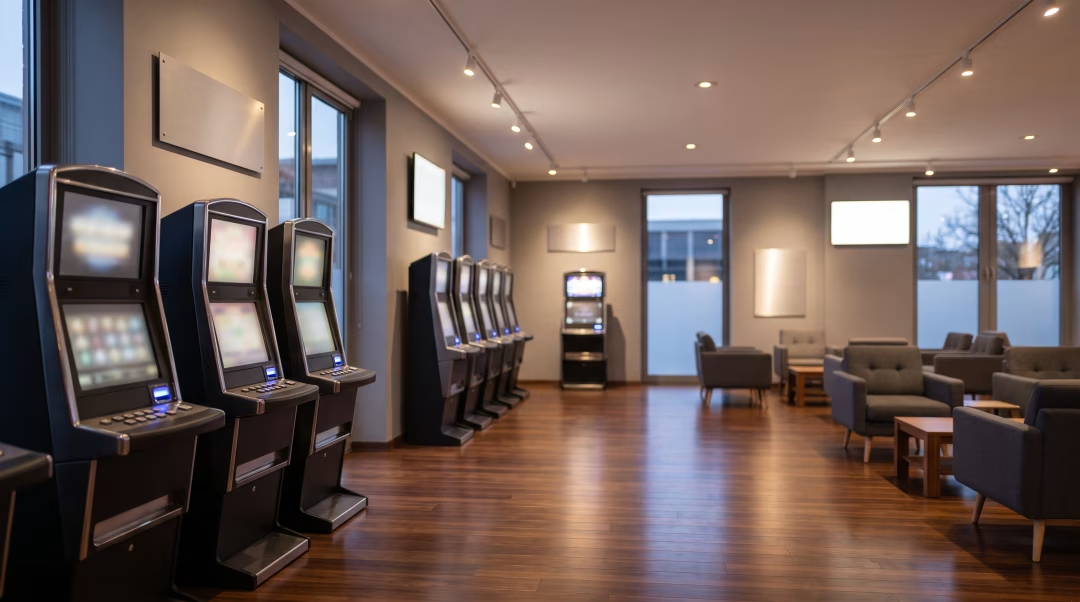
Long before the familiar glow of a video gaming terminal, or VGT, became a common sight in Illinois establishments, the state's relationship with legal gambling was primarily defined by the lottery and riverboat casinos. The Riverboat Gambling Act of 1990 authorized a limited number of casino licenses, confining them to floating vessels on specific waterways. While popular, this model limited access for a vast majority of the state's population, often requiring a significant drive and the commitment of a full day or evening. The experience was vastly different from the casual, local entertainment that video gaming would eventually offer. The debate for expanded gaming simmered for years, with proponents highlighting the potential for significant tax revenue to help with state budget shortfalls.
The turning point arrived in 2009 with the passage of the landmark Video Gaming Act. Signed into law by Governor Pat Quinn, this legislation was part of a larger capital plan to fund statewide infrastructure projects. The Act authorized the placement of up to five VGTs in licensed retail establishments with liquor licenses, such as bars, restaurants, and truck stops. It also created the framework for regulation under the strict oversight of the Illinois Gaming Board (IGB). The intent was clear: to capture revenue that was being lost to a massive underground market of illegal "gray machines" and to provide a new revenue stream for both the state and small business owners. The law established a clear difference between video gaming and traditional casino gambling, focusing on a more localized, smaller-scale model.
While the Act was passed in 2009, it took several years to fully implement. The Illinois Gaming Board had the monumental task of creating a comprehensive regulatory system from the ground up. This included establishing licensing procedures for terminal operators, distributors, technicians, and the establishments themselves. A crucial component was the creation of a Central Communications System to monitor every single VGT in the state in real time, ensuring integrity, fair play, and accurate tax reporting. After years of careful planning and legal challenges, the first legal VGTs finally went live in October 2012.
The growth was explosive. Thousands of establishments across Illinois applied for licenses, eager to add a new dimension to their business. For many local bars and fraternal organizations, video gaming was a lifeline, providing a steady income stream that allowed them to renovate, expand, and weather economic downturns. The number of terminals and locations grew exponentially in the first few years, quickly surpassing the total number of slot machines available in all the state's riverboat casinos combined. This expansion brought gaming closer to home for millions of residents, making it a convenient and accessible form of entertainment for a girls' night out or a casual stop after work.
Initially, most VGTs were simply added to existing bars and restaurants. However, as the industry matured, a new type of venue began to emerge: the dedicated video gaming lounge or cafe. These establishments were designed specifically around the gaming experience. Unlike a typical bar where gaming might be an afterthought, these lounges prioritize player comfort, creating a clean, quiet, and upscale environment. They offer comfortable seating, complimentary snacks and soft drinks, and attentive service, distinguishing themselves from the often loud and crowded atmosphere of a traditional sports bar. This model proved incredibly successful, appealing to a wide demographic, including those who might not frequent a traditional bar but were interested in a relaxed gaming experience. For many, the benefits of a small-town video gaming lounge became the preferred way to play, offering a sense of community and personalized service not found in larger casinos.
The technology behind today's VGTs is a world away from old-fashioned mechanical slots. Each machine is a sophisticated computer powered by a certified Random Number Generator (RNG) to ensure every spin is independent and fair. The games themselves have also evolved dramatically, with stunning graphics, immersive sound, and complex bonus features. Players can now enjoy a huge variety of game types from leading manufacturers like Aristocrat, IGT, and SG Gaming. Understanding concepts like Return to Player (RTP) and game volatility can enhance the experience. Modern games often include exciting elements like the Hold and Spin feature, stacked wild symbols, and intricate bonus rounds that add layers of excitement to every session.
From its inception, the Illinois Video Gaming Act placed a strong emphasis on responsible gaming. The Illinois Gaming Board has strict regulations in place to protect players and ensure the integrity of the industry. All advertising must include messaging and a helpline number for those who may have a problem. Furthermore, the state provides a self-exclusion program that allows individuals to voluntarily ban themselves from all licensed gaming facilities in Illinois. Reputable establishments are committed to these principles, and staff are trained to recognize the signs of problem gambling and provide information on available resources. Understanding how to gamble responsibly by setting limits on time and money is key to ensuring that video gaming remains a fun and entertaining pastime. If you or someone you know needs help, numerous gambling help resources in the Metro East are available.
The history of video gaming in Illinois is a story of innovation, regulation, and community. It has created thousands of jobs, generated billions in tax revenue for the state and local municipalities, and provided a popular new entertainment option for adults. From the legislative halls of Springfield to friendly neighborhood lounges, video gaming has firmly cemented its place in the social fabric of Illinois.
Video gaming was officially legalized in Illinois when the Video Gaming Act was signed into law in July 2009. However, it took several years to establish the necessary regulations and infrastructure, with the first legal video gaming terminals (VGTs) going live for public play in October 2012.
The primary purpose of the Video Gaming Act was to generate new revenue for the state to fund a major capital infrastructure plan called "Illinois Jobs Now!". A secondary goal was to regulate and tax the vast number of illegal "gray area" gaming machines that were already operating throughout the state, capturing that revenue for public benefit.
Video gaming in Illinois is strictly regulated by the Illinois Gaming Board (IGB). The IGB is responsible for licensing all operators, distributors, technicians, and establishments. They also oversee the integrity of the games and ensure compliance with all state laws and responsible gaming mandates.
For thousands of licensed establishments like bars, restaurants, and fraternal organizations, the introduction of video gaming provided a crucial new source of revenue. This additional income helped many small businesses survive economic downturns, renovate their facilities, hire more staff, and contribute more to their local economies.
While the games can be very similar, there are key legal and regulatory differences. VGTs are limited in number per location (currently up to six) and have a lower maximum bet limit ($4) and a lower maximum cash prize per play ($1,199) compared to casino slot machines. You can explore the difference between a VGT and a slot machine in more detail.
